

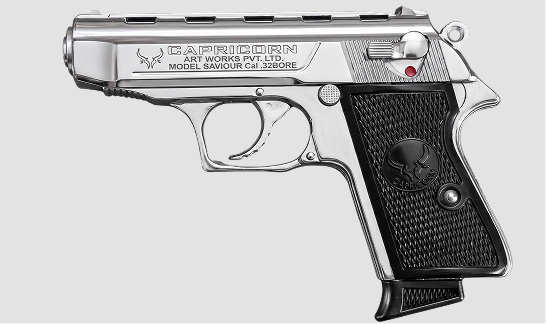
If you’re buying a firearm in India, the first question isn’t “which gun?” but “which category?” Every firearm is classified as NPB (Non-Prohibited Bore) or PB (Prohibited Bore), which decides who can apply for it and which authority issues the licence. This guide covers what the terms mean, how classification works, and how to tell which side of the line a firearm falls on.
Quick answer
NPB firearms are in calibres not reserved for the armed forces and police. Licences for them are issued at the district or state level. PB firearms are in calibres used by the military and police. Licences for them come from the Central Government and are granted only in special cases.
What does “bore” mean?
Bore (or calibre) is the inside diameter of the barrel, which roughly matches the bullet’s width. It’s measured in inches (.32, .45) or millimetres (7.65 mm, 9 mm). For a full breakdown of how popular calibres compare, read our calibre guide.
How classification actually works
Many buyers assume classification depends on the gun’s brand, size or appearance. It depends on the cartridge the firearm can chamber and fire.
- The Arms Act, 1959 and the Arms Rules, 2016 set out categories of arms in Schedule I.
- Under the 2016 Rules, firearms fall broadly into three groups: prohibited, restricted and permissible (non-prohibited).
- “Prohibited arms” in the strict sense, such as fully automatic weapons, have no civilian licence route at all.
- In everyday speech, “PB” usually refers to the restricted category: calibres used by services such as 9mm Parabellum, .303 and 7.62x51mm NATO.
- “NPB” refers to the permissible category, which is what most civilian licences cover.
Because the test is “can it chamber and fire a restricted cartridge?”, a firearm in another calibre name can still be treated as PB if it can fire one of those rounds.
What is NPB (Non-Prohibited Bore)?
- Examples: .32 pistols and revolvers, .22 firearms, 12-bore shotguns of the required barrel length, and, under the current Arms Rules, .45 ACP and 7.62x25mm Tokarev pistols.
- Licence issued by: The district or state licensing authority, usually through the District Magistrate’s office, or the police commissioner in metro cities.
- Who it suits: Applicants who can show a genuine need, such as self-protection or sport, as the Arms Act and Rules require.
What is PB (Prohibited Bore)?
- Examples: 9mm Parabellum (9x19mm), .303, 7.62x51mm NATO, 7.62x39mm and 5.56mm.
- Licence issued by: The Central Government (Ministry of Home Affairs).
- Who it suits: A small group, such as people facing documented serious threats, certain public officials, or specific professional needs. Scrutiny is much stricter and rejections are common.
NPB vs PB at a Glance
| NPB | PB | |
|---|---|---|
| Meaning | Non-prohibited bore (permissible) | Prohibited / restricted bore |
| Licence authority | District / state | Central Government (MHA) |
| Civilian access | Standard licence route | Special cases only |
| Scrutiny | Moderate | Very strict |
| Typical examples | .32, .22, .45 ACP, 7.62×25 Tokarev, 12-bore | 9mm Parabellum, .303, 7.62 NATO, 5.56 |
Classifications can change by notification. Always confirm against the current Schedule I of the Arms Rules 2016.
A brief history
India’s firearms law has changed in stages:
- Before 1987: Both NPB and PB licences could be granted by state governments or District Magistrates.
- From 1987: The power to grant PB licences moved to the Central Government, while NPB stayed at state and district level.
- 2016: The Arms Rules, 2016 replaced the earlier 1962 Rules, reorganised the categories and widened what is treated as permissible. The Ministry of Home Affairs has said the new Rules did not add new restrictions on licensing individuals.
- 2019: The Arms (Amendment) Act, 2019 tightened other aspects of the law, including the number of firearms one person may hold. Check the current limit on official sources.
Common NPB and PB firearm types
Classification applies to every type of firearm, but here is how the usual categories tend to work:
- Pistols and revolvers: Most civilian pistols and revolvers are NPB, with 9mm Parabellum the main well-known exception.
- Shotguns: Smooth-bore guns up to 12 bore are usually NPB, but older rules treated barrels under 20 inches as prohibited, so check the current rule.
- Rifles: Calibres like .22 are NPB. Service rifle calibres such as 7.62x51mm NATO, 7.62x39mm, .303 and 5.56mm are PB or restricted.
If you’re unsure where a specific model falls, confirm it before you apply. Don’t rely on a dealer’s verbal assurance alone.\
Common myths
“The Arms Rules 2016 made licences harder.”
The MHA has said the 2016 Rules brought no new restrictions on grant of licences to individuals.
“It depends on the brand or the look of the gun.”
It depends on the cartridge it can fire.
“If it’s legal in the USA, it’s NPB here.”
Indian classification is separate and set by Indian law.
“A compact version is a different category.”
Barrel length and frame size don’t change the cartridge, so a compact .45 ACP is classified like a full-size .45 ACP.
“My dealer said it’s fine, so I’m covered.”
The legal responsibility sits with the licence holder. Verify on your own.
Which category is right for you?
- Start with your need. Self-protection, sport and crop protection are all recognised purposes, and each shapes which firearm types make sense.
- Choose a calibre within NPB. Most civilians land here. Compare recoil, size and capacity using our calibre guide.
- Treat PB as exceptional. If you believe you qualify, expect a detailed application at the central level and speak to a legal adviser.
- Apply for the right licence. Your licence names the weapon type and bore, and you can only acquire what it permits. See our arms licence guide.
What happens if you get it wrong?
Possessing or acquiring a firearm outside your licence terms is a serious criminal offence under the Arms Act, with potential imprisonment. This is why checking the category before you buy matters. If you’re unsure, ask the licensing authority or a legal professional before the purchase.