

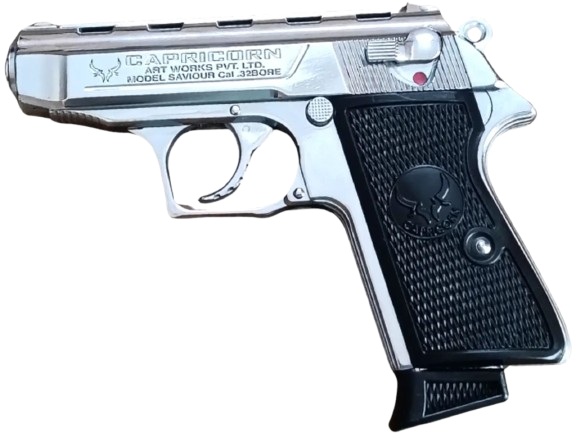
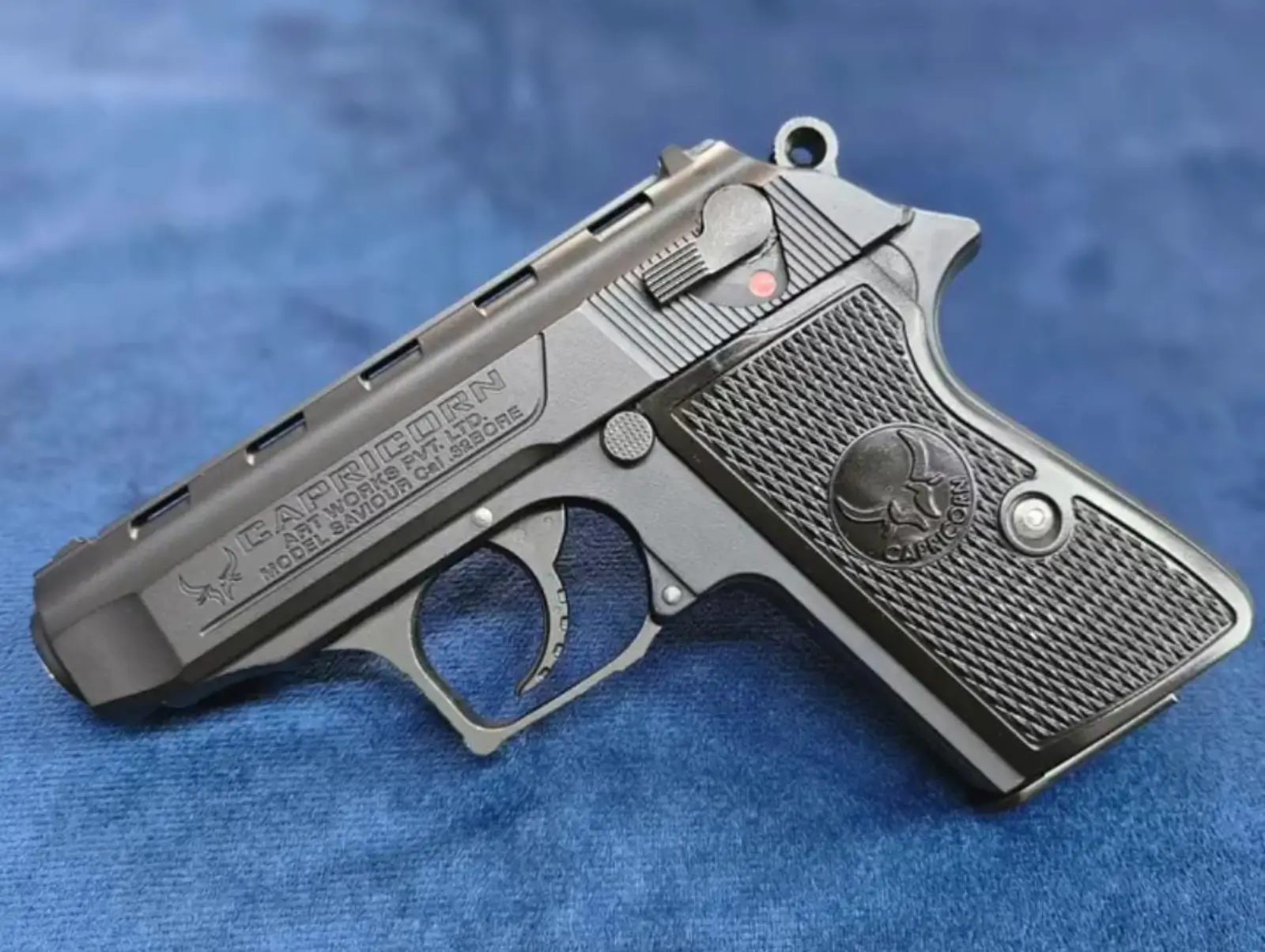
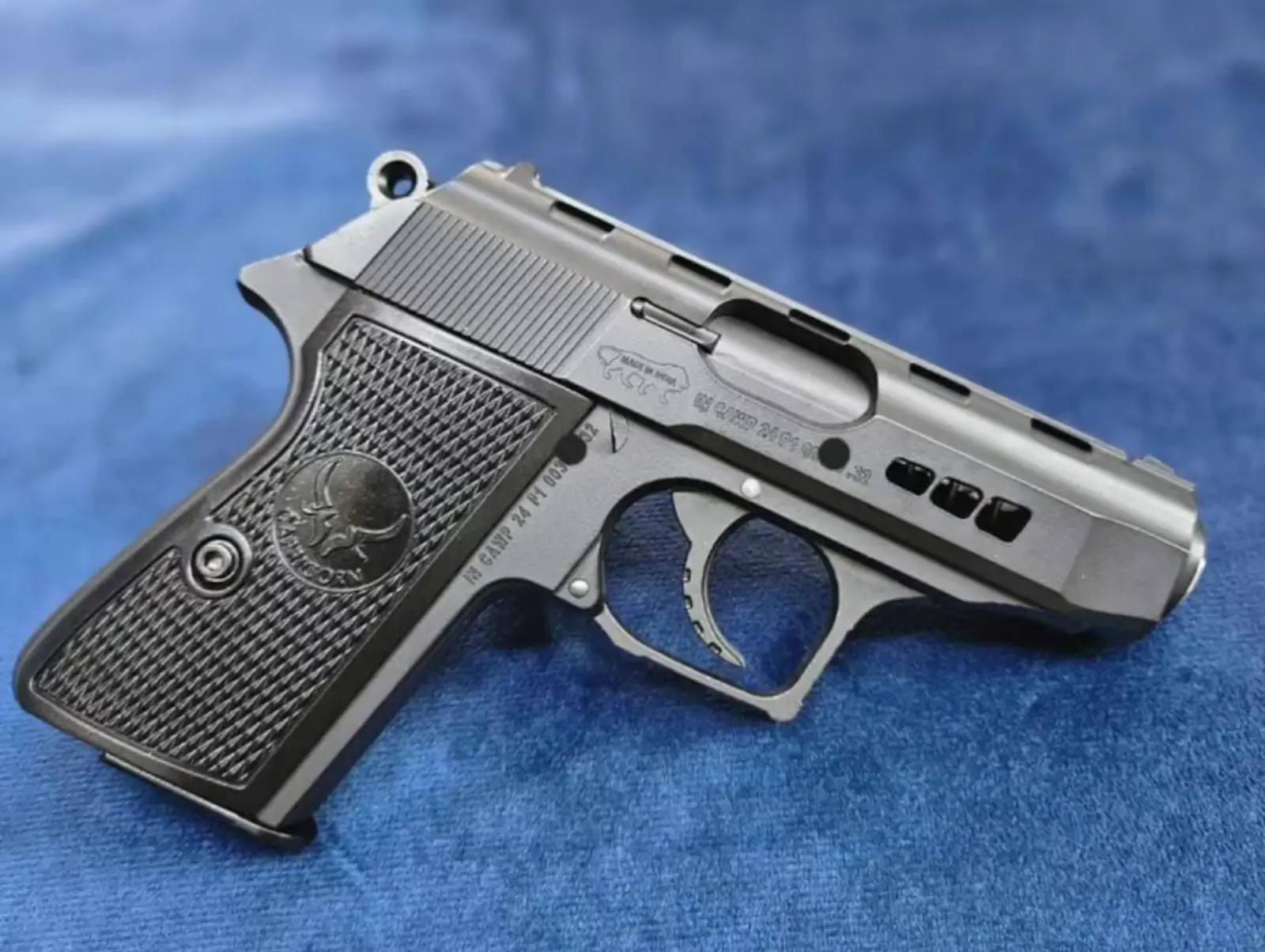
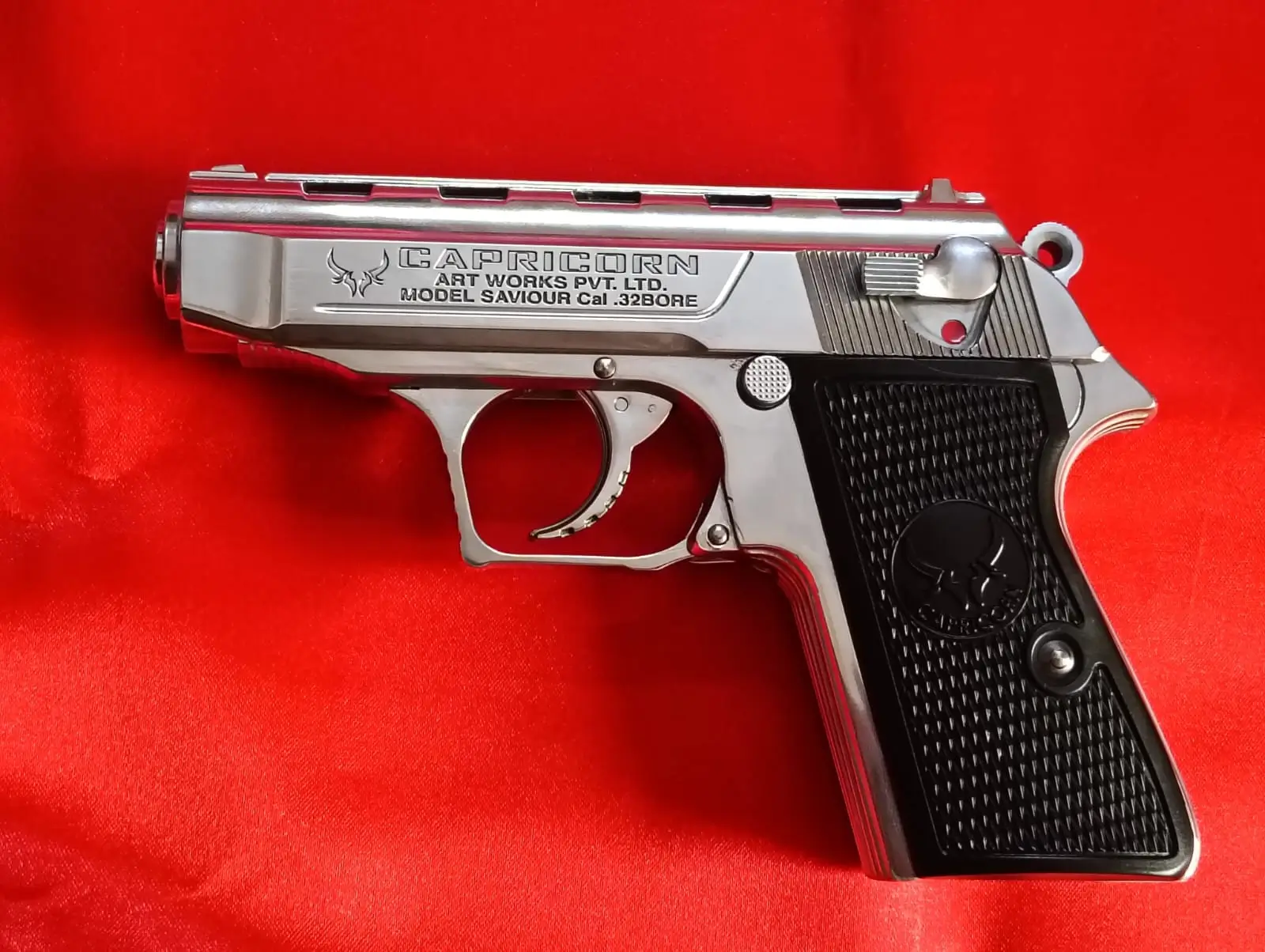
.32 BORE Pistol Capricorn
A refined tactical sidearm designed for professionals who value precision, durability, and a sleek modern profile in every operation.
Color Option Available: Black , Chrome
IMPORTANT SAFETY INFORMATION
Read the instruction and warning in this manual CAREFULLY BEFORE using this firearm.
WARNING
THE FIRST CONCERN WHEN HANDLING ANY FIREARM IS SAFETY. THE FAILURE TO DO SO MAY RESULT IN PROPERTY DAMAGE, SERIOUS BODILY INJURY OR EVEN DEATH.
NOTE:
This manual refers to the use of the pistol by civilian users. This manual refers to the use of the pistol by civilian users. This safety & instruction manual should always accompany this firearm and be transferred with it upon change of ownership or when presented to another person. Barrel must be pointed away from the shooter, barrel in a generally horizontal direction, and with the grip of the pistol pointing downwards. Note that the illustrations in this manual are for explanation purposes and may differ from the actual gun.
DISCLAIMER:
Under no circumstances shall CAPRICORN ART WORKS PRIVATE LIMITED be responsible for incidental or consequential damages with respect to economic loss or injury to the user, normal wear, failure to operate, improper, faulty or to following instructions in this manual, unsafe handling, failure to maintain, modification of this firearm, use of improper ammunition, or violation of statutory rules or any other third-related hazards leading to injury. To read these disclaimers carefully before use. The warranty may result in serious injury or both to you and damage of property.
| LIST OF CONTENTS | |
|---|---|
| 1 | Safety Measurements |
| 2 | Storage |
| 3 | Transportation |
| 4 | Feature Identification |
| 5 | Pistol Inspection |
| 6 | Operating Instructions |
| 7 | Disassembly of Firearm |
| 8 | Reassembly of Firearm |
| 9 | Care and Maintenance |
SAFETY MEASUREMENTS
1. Safety should be the first concern of every firearm owner in every situation.
2. Always treat your firearm as loaded and assume that it will fire if the trigger is pulled; so handle it with care.
3. Do not put your finger inside the trigger guard unless you intend to fire.
4. Do not fire randomly in public places and into the blue because bullet can travel in unpredictable directions with considerable velocity and can glance off from any surfaces like rocks or water user causing unwanted injuries and damages to anyone or any property.
5. Never load a loaded firearm and never load a locked firearm.
6. Before handling any firearm familiarise yourself with its working and never depend on its mechanical safety.
7. Do not consume intoxicants before or while shooting; make sure not to store the firearm in unstable environmental conditions.
8. Always wear eye and ear protectors that are specified for firearm use.
9. Know all the legal consequences of using the firearm.
10. Before using your firearm ensure that there are no obstructions in the barrel like mud, water, snow or any 3 other object causing dangerous increase in pressure resulting in damage of your firearm and causing unwanted injuries to yourself and others.
11. Always use the specified ammunition for your firearm.
12. Do not disassemble, manipulate, adjust or change any of the internal components of your firearm resulting in improper functioning thus affecting the safety and reliability of your firearm
STORAGE
1. One of the most important rule of firearm safety is its safe and secure storage.
2. Keep your firearm locked, unloaded and secure when not in use.
3. Keep ammunition and the firearm in separate location.
4. Always prevent your firearm from being stolen or being used by untrained or unqualified individuals.
5. Do not assume a hiding place is a safe storage location and make sure to change the storage place of your firearm from time to time in order to maintain its inaccessibility from unauthorized persons.
6. Always keep your firearm away from children.
TRANSPORTATION
1. Safe and secure transportation of your firearm is solely your responsibility.
2. Make sure your firearm is always unloaded and locked during transportation.
3. Obey all the laws relating to the storage and transportation of firearms. Your local police department can furnish you with available information on storing and transporting a firearm thus preventing unauthorized access of your firearm by others
FEATURE IDENTIFICATION
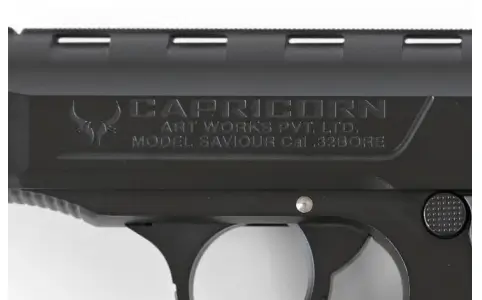
Fig.4.1
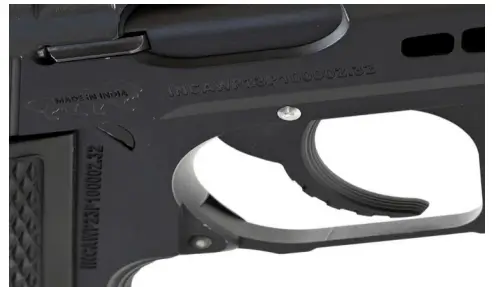
Fig.4.2
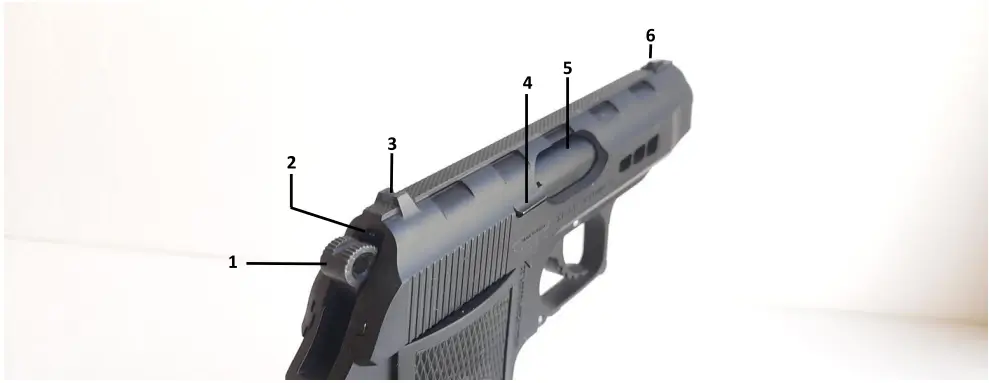
Fig.4.3
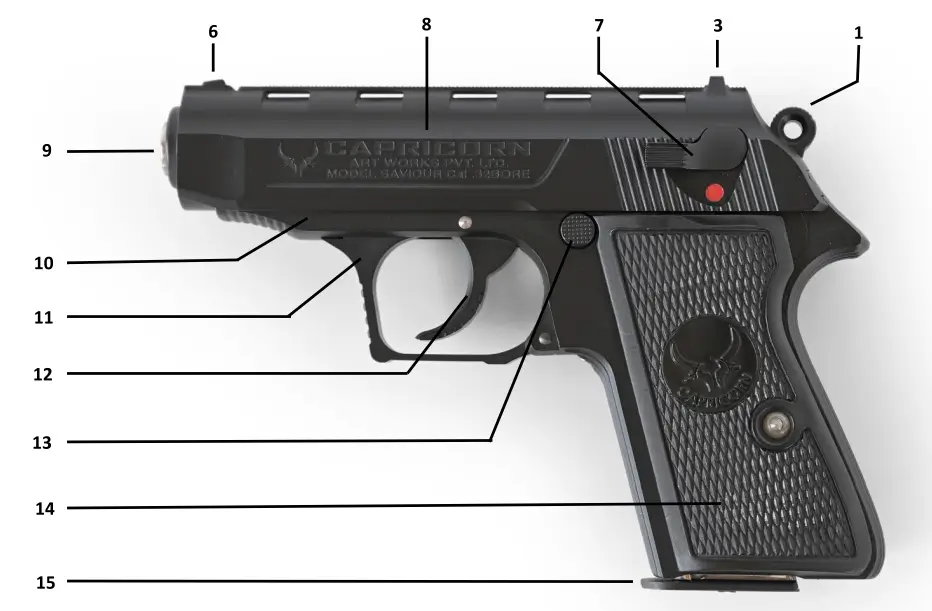
Fig.4.4
FUNCTIONAL PRINCIPLES
1. Hammer
2. Loaded Chamber Indicator Pin
3. Rear Sight
4. Extractor
5. Ejection Port
6. Front Sight
7. Safety Lock
8. Slide
9. Barrel
10. Frame
11. Trigger Guard
12. Trigger
13. Magazine Release/Lock
14. Grip
15. Magazine
PISTOL INSPECTION
1. Before inspecting your firearm ensure that it is unloaded. To do this hold the grip of the frame with your finger off the trigger and outside the trigger guard, point the barrel in safe direction. Rotate safety lock fully down into (SAFE) position as shown in Fig 5.1 then remove the magazine by pressing the magazine release button
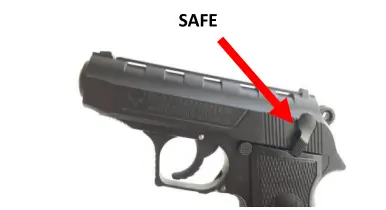
Fig. 5.1
2. Hold the slide from its serrated sides with the rear end with thumb and fingers and pull the slide in fully backward position and extract any cartridge from chamber and clear it from the pistol.
3. To lock the slide in open position insert empty magazine into the pistol and then pull the slide fully back and then release to lock it open then remove the magazine and visually check that there is no obstruction in the chamber and the bore is clean and dry.
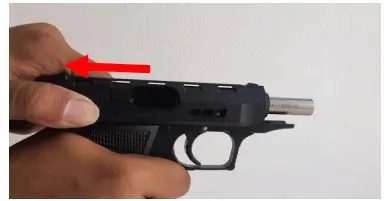
Fig. 5.2
4. Also check that the firing pin is not protruding out from the breech face if it happens so then do not try to load the firearm instead get it examined from a certified gunsmith.
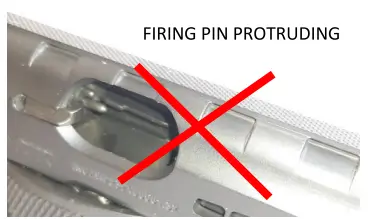
Fig.5.3
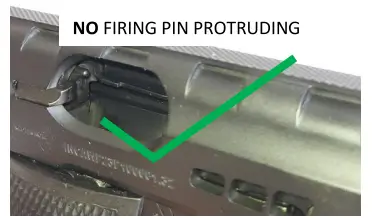
Fig.5.4
5. To close the slide on unloaded pistol, first remove the magazine and then pull the slide fully back and release it. Make sure that the slide moves freely along the frame through its full length of travel.
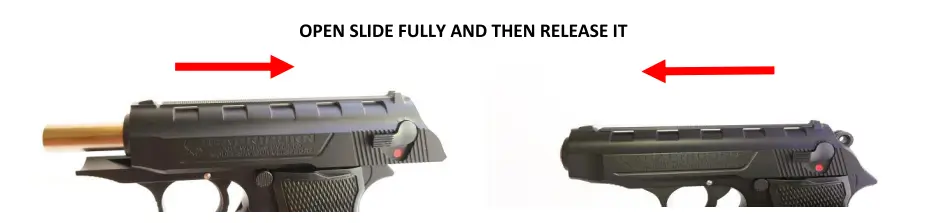
Fig.5.5
6. Familiarize yourself with the safety lock on your pistol. When the safety lock is fully up (parallel to the top of the slide) it is in (FIRE) position see Fig (5.6); when the safety lock is fully down it is in the (SAFE) position see Fig (5.7). Notice how the safety lock looks and feels in each of the two positions of its extreme travel – fully up for (FIRE) and fully down for (SAFE).
7. Your pistol will have a red dot, which is totally visible when the safety lock is in the (FIRE) position; however, do not depend on your inability to see a red dot as the only indication that the safety lock is engaged.
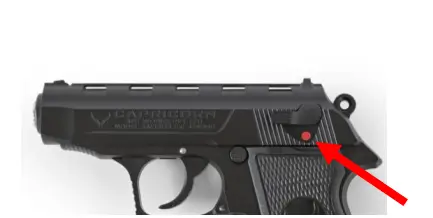
Fig.5.6
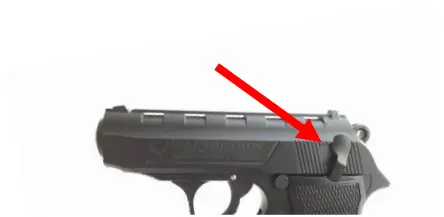
Fig.5.7
8. To unload a loaded magazine, hold it with the bullet end of the cartridge pointing away from you and others and press each cartridge forward and out of the magazine.
9. To check whether there is bullet in the chamber of your pistol there is a loaded chamber indicator pin which can be observed by looking at the rear of the slide just above the hammer, see Fig. (5.8) noting a small hole. If the firearm’s chamber is loaded, you will observe a pin protruding from this hole, see Fig (5.9).
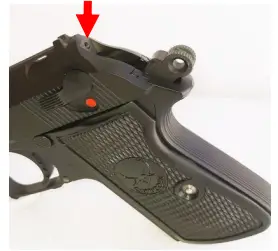
Fig.5.8
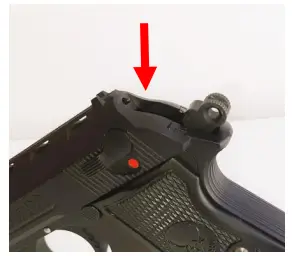
Fig.5.9
10. You must follow this procedure every time a firearm leaves your hand, is cleaned, handed to you or another person, transported or stored.
OPERATING INSTRUCTIONS
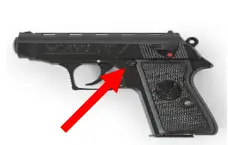
1. To remove the magazine press the magazine release button, located near the trigger guard, with your thumb.
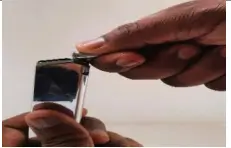
2. Hold the magazine with one of your hands and with the other one insert the cartridges one at a time, pressing them down and to the rear. Insert the magazine into the pistol until it is held by the magazine lock. If the magazine lock is not engaged, the magazine can fall out during firing.
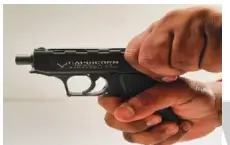
3. Hold the pistol with one hand keeping your finger away from the trigger. With the other hand pull the slide to its limit and release it, so slide will go forward under recoil spring pressure and insert one cartridge in the chamber.
4. The pistol is now ready to fire by pulling the trigger. After firing, the slide will recoil from gas pressure, ejecting the empty case and feed another cartridge into the chamber from the magazine. The pistol is now ready to fire again.
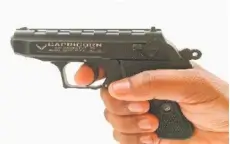
5. After firing, you must allow the trigger to move fully forward before you can fire the next shot. Failure to do so will prevent the lockwork from fully cycling and will prevent you from being able to fire the next shot. Keep your finger off the trigger and outside the trigger guard until you are ready to fire again. This sequence can be repeated until the last round has been fired. Trigger pull and trigger travel is the same from the first to the last round.
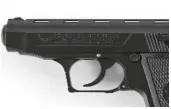
6. After the last round has been fired at which time the magazine follower exerts upward pressure on the slide stop causing it to engage the slide and hold it in the “open” position. In order to make it return to its rest position, pull the slide fully back to its rear end and release it, let the slide go forward (you must remove the empty magazine first).
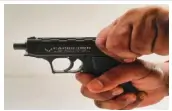
7. If you choose to stop firing and magazine is not empty, place firearm on safe by moving safety lock to the down position, remove magazine. While pointing in a safe direction pull the slide back towards its rear end, the magazine follower exerts upward pressure on the slide stop causing it to engage the slide and hold it in the “open” position at this position you can check and make sure that if the chamber is empty.
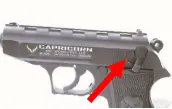
SINGLE ACTION FIRING REQUIRES SIGNIFICANTLY LESS PRESSURE ON THE TRIGGER AND REDUCED TRIGGER TRAVEL THAN DOUBLE ACTION FIRING.
DISASSEMBLEY OF FIREARM
1. Point the pistol in a safe direction and rotate the safety decocking lever into the down (SAFE) position.
2. Remove the magazine by depressing the magazine release button and clearing it from the firearm.
3. Clear the chamber and verify that it is empty.
4. With the pistol unloaded, hold the grip firmly in one hand and put your index finger along the side of the trigger guard. With your other hand, pull down the front of the trigger guard (Fig. 7.1).
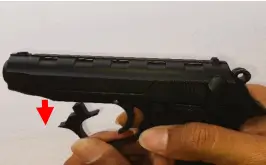
Fig.7.1
5. When the front of the trigger guard comes out of the frame, press it sideways with your index finger to keep it from springing back up into the frame.
6. With your free hand, grab the slide by its grooves and pull it all the way back until you can lift the back end up, clear off the frame (Fig. 7.2). Ease the slide forward and off the pistol.
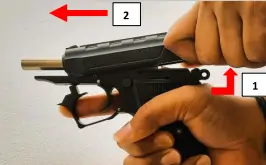
Fig.7.2
7. Be careful not to let go of the slide while you can still feel the spring tension, or it could fly off the pistol and be damaged or cause injury.
8. Pull the recoil spring off the front of the barrel (Fig.7.3).
No Further disassembly is required.
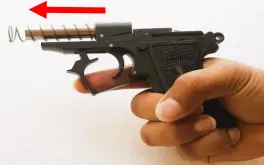
Fig.7.3
REASSEMBLEY OF FIREARM
1. Put the recoil spring, small end first, on the barrel as shown in Fig. 8.1. (If you put it on the large end first, it can fall off when you point it down). Cock the hammer. Pull the trigger guard down out of the frame as shown in Fig. 8.1.
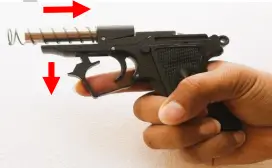
Fig.8.1
2. Put the slide over the forward end of the recoil spring and pull the slide back onto the barrel all the way until it stops (Fig. 8.2).
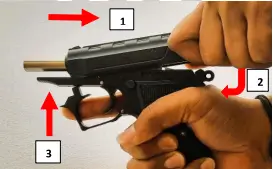
Fig.8.2
3. Then push the rear of the slide down until the grooves inside the slide line up with the rails on the frame. When properly aligned, ease the slide forward all the way.
4. Then let go of the trigger guard so it goes up into the frame.
5. Before you load the pistol, check for proper assembly.
6. Look at the breech face (Fig 8.3 & Fig 8.4) and in the chamber and barrel, slide the slide back and forth, put an empty magazine in, and be sure the slide locks open. Be sure the pistol is unloaded and pointing in a safe direction when you test its functions.
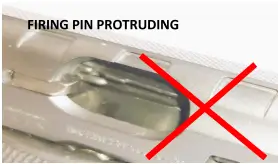
Fig.8.3
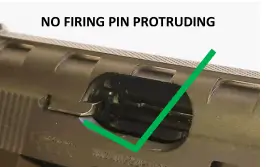
Fig.8.4
CARE AND MAINTENANCE
The firearm may be cleaned and lubricated under normal conditions with the disassembly steps described under point no 7 & 8.
In order to keep a firearm safe to use, it must be kept clean and covered with a light film of good quality oil to prevent corrosion. The barrel bore should be cleaned and left free of debris. For normal cleaning, rub the pistol with a lightly oiled cloth. In the same way, proceed with the bore of the barrel. Excess oil should be removed. Dust should be removed from all crevices with a small clean brush.
WARNING
Before cleaning, (1) point the muzzle in a safe direction, (2) keep your finger off the trigger, (3) remove the magazine, then (4) pull back the slide and lock it to the rear, (5) look and feel the magazine well and chamber to confirm the pistol is empty. Never attempt to clean a loaded firearm.